Friday, 5 July 2013

Singapore English/ Singlish Vs Standard English

Examples of Bad English:

1. Are there evidences that Jimmy is guilty?
2. Is there an evidence that Jimmy is guilty?
3. They had a number of equipments with them.
4. The police brought the case properties to court.
5. Edward has been charged for cheating.
6. Were there any mails for me?
7. I am checking my emails right now.
8. Whose pants is this?
9. The accused bought a jewelry with the money.
10. I like looking at the aircrafts at Changi.


Standard English:

1 & 2. "Is there (any) evidence that Jimmy is guilty?" ["Evidence" is an uncountable noun.]

3. "They had a lot of equipment with them." [There is no such word as "equipments".]

4. "The police brought the case property to court." [It is either "exhibits" or "property" and not "properties".]

5. "Edward has been charged with cheating." [A person is arrested FOR an offence but not charged FOR it.]

6 & 7. "Mail" is an uncountable noun, and as such should be referred to as a single collective item: "Was there any mail for me?" Similarly, "email" is uncountable when it refers collectively to all your email in your inbox.

8. "Whose pants are these?" [Pants like trousers, jeans, shorts, Khakis, tights, binoculars, glasses, pliers, scissors, etc., are ALWAYS plural whether there is one such item or many. For example, "where ARE my scissors" and not "where is my scissors".]

9. "The accused bought A PIECE of jewelry with the money." [Jewelry is uncountable].

10. "I like looking at the aircraft at Changi." [The noun "aircraft" does not change whether singular or plural; one aircraft, or 5000 aircraft.

pgs. 69, 71, 72, Unlearning Singlish

Saturday, 29 June 2013

Features of Indian English

1. She is my cousin-sister.
2. He brought along his cousin-brother.
3. He returned to his native place.
4. There was a pin-drop silence in the room.
5. The accused was shown the charge sheet.


The above are typical examples of Indian English. They are not acceptable in Standard English, and they are not found in any Standard English dictionaries.

"cousin-sister": a female cousin. [A person is either a cousin or a sister but cannot be both].

"cousin-brother": a male cousin. [A person is either a cousin or a brother but cannot be both].


"native place": a place of birth.


"pin-drop silence": absolute silence. [This is an abusage of the idiom, "you can hear a pin drop"].


"charge sheet": a list of accusations or a piece of paper/document on which an offender's crime/offence has been typed out.

Source: pgs. 77, 79, Indian English.

"Isn't it?" and "Is it?" in Singapore, Malaysian and Indian English

"Isn't it?" Vs "Is it?"

1. We have seen that film already, isn't it?
2. We returned the book yesterday, isn't it?
3. You want it at six o'clock, is it?
4. John: "My sister has just had triplets." Mary: "Is it?"
5. You will come, isn't it?
6. They should do it, isn't it?


All the above are examples of Singapore, Malaysian and Indian English. There is a strong tendency in these sub-standard varieties of English to simplify the tag-questions system drastically and to use instead the single tag "isn't it?" or "is it?".

"Is it?" occurs extremely frequently in at least two different sorts of situation: first, it is used when confirmation of a fact is being sought (as in Nos. 3 & 4) and second, it is also used as an exclamation in response to a statement which would elicit a different auxiliary and pronoun in Standard English---for instance, in No. 4 sort of situation.

These sub-standard usages--- "isn't it?" and "is it?" --- can be found in the speech of Singapore/ Malaysia/ Indian journalists, teachers of English and even senior government officials in the countries' Civil Service.

Sources: pg. 48, "The English of Singapore and Malaysia" by R.K.Tongue and "Indian English" by Pingali Sailaja.

Saturday, 22 June 2013

Singapore English and Indian English

All the following sentences are non-standard English sentences:

1. Recently, we found a question paper.
2. Yesterday, I went to see a movie.
3. In the park, the bombs were placed.
4. At four o-clock, the movie begins.


Not only are the above common in Singapore English but they are also typical examples of Indian English. In such sentences, when an item is being discussed, it is often placed at the beginning and the details about it are given after it. It is a common feature of Indian English: the adverbial indicating place, time, and other additional information is placed at the beginning of a sentence rather than at the end.

Often, even objects in a sentence get fronted:

5. This book I will return tomorrow. [Should be, "I will return this book tomorrow."]
6. That you told me. [Should be, "You told me that."]
7. Five minutes (also) I am not getting. [Should be, "I am not getting five minutes."]

Source: pgs. 51-52, "Dialects of English: Indian English".

Monday, 17 June 2013

Untouchable

The word "untouchable" has wholly two contradictory meanings: as an adjective, it means "exempt from criticism, unparallelled.". But it also means "loathsome or unpleasant to the touch". As a noun, it refers to a member of the class that is excluded from and considered unclean and defiling by the four Hindu castes.

So, without a context, "untouchable" could be misunderstood, especially in the following types of statements:

1. He is really untouchable.
2. He is considered an untouchable in our office.
3. We have a number of untouchable employees.

Source: Standard English dictionaries.

Saturday, 15 June 2013

Staff Vs Staffs and Audience Vs Audiences

Staff of the Month?


Native speakers may be surprised to see displays such as "Staff of the month". In Standard English, this is "Employee of the Month", since "staff" refers to all the workers.

"Staff" is a collective countable noun that refers to the people who work in an organisation:

1. "The staff were very good."

In this example, the reference is to the employees as a group. Prescriptive grammar requires a singular verb although in British English it is common to see a plural verb in such constructions.

"Staff" as a plural noun refers to the people who are part of a particular staff:

2. "10 staff were allocated to the task." [Note: It is "staff" and not "staffS"].

While it is countable, it is much more commonly encountered in the singular, although the plural is NOT impossible:

3. Who is actually doing the taping is not publicly known, he says, despite reports that the STAFFS of BOTH the Prince (of Wales) and the Princess set up counter-intelligence units. [US press Report]

The word "staffS" here means "both the Prince's staff and the Princess's staff." It is quite similar to "audience", in this respect: invariably "audience" a singular noun; the exception is, when the reference is to more than "one group of audiences" (=not one  group but groups of people collectively, not in one spot but in several places of concerts,movies or performances.)

In Singapore English, "staff" is often, if not usually, used to refer to ONE person (=synonymous with "employee).

This is wrong, of course.

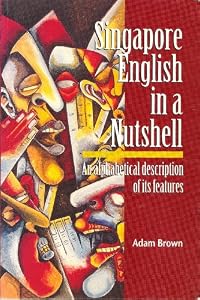
Source: pgs. 210-211, Singapore English in a Nutshell by Adam Brown; standard English Dictionaries.

Wrong Vs Wrongly

Q From Dr Peter Rose, Australia: Correction to a correction. When you wrote in the last issue, “Apologies to Geoff Pullum for spelling his name wrong”, surely you meant “wrongly”?

A The 20 exclamation marks Dr Rose added at the end of his message surely said “Aha! I’ve caught you in an error.” Rob Brennan, also from Australia, questioned my usage in a more restrained way: “Am I being too much of a prescriptivist by suggesting that one may sometimes spell a name wrongly, not wrong?”


Was I doing something wrong? Have I been wrongly accused? These are not easy questions. They remind me that people get confused about when to use many such pairs, not just wrong and wrongly.

One cause is that the form of the two suggests that the first is an adjective and the second an adverb, with wrong only to be used to modify nouns (“this is the wrong colour”) and wrongly to modify verbs (“several men were wrongly detained”). But wrong can also be an adverb. There’s nothing in the least new about this — the Oxford English Dictionary has examples from the thirteenth century onwards.

Robert Burchfield noted in his 1996 revision of Fowler’s Modern English Usage that “The subtleties attending the various uses are considerable”, pointing out that the OED devotes five times as much space to adverbial wrong as it does to the notionally correct wrongly.

The quick and easy rule is that wrongly appears before the verb being modified (“the earlier case was wrongly decided”) and wrong after the verb (“he answered the question wrong”). Like most such rules, it’s not even half the story. Style guides and grammars for learners try to give more complete guidance, variously stating that, if the situation is formal, wrongly may be the better choice in either position; if the adverb comes before the verb, wrongly is the only possible form; if the verb is a common short one, such as do, get, have or go, it often forms a set phrase in which wrong is the idiomatic choice (“don’t get me wrong”, “she did him wrong”, “how did he go wrong?”); wrong is preferred after the verb when the intended meaning is “in an unsuitable or undesirable manner or direction” or “incorrect” (as in spelling something incorrectly); if it means “falsely”, then wrongly is the correct form (“rightly or wrongly”, “the award was denied him wrongly”, “he was incapable of acting wrongly”); if it is followed by a “that” clause, then wrongly is used (“she guessed wrongly that he was a teacher”). I suspect that this profusion of advice aiming to codify the eccentricities of English idiom confuses the learner rather than helping.

More generally, English makes much less distinction between adverbs and adjectives than the more elementary grammar books would have us believe. It might be better to class such words under the general title of modifier (though contemporary grammarians reserve this word for a different phenomenon); often the form of the modifier doesn’t match the rule we learned in childhood about adding -ly to make adverbs. Lots of words that look like adjectives can act as adverbs, particularly in idiomatic English: “try hard”, “turn sharp left”, “hold tight”, “he had spread himself too thin”, “the desk was piled high with files”, “he burrowed deep into his memory”, “leave it as late as you can”, “the ships were wide apart”, “teach him to hold his pen right”.
In his article entitled unidiomatic -ly, Robert Burchfield wrote that “Standard speakers for the most part instinctively know which form is appropriate in a given context” but added “To regard the addition of -ly as the only way of turning an adjective into a word meaning ‘in the manner of, after the style of, etc.’, is to fall far short of understanding how the language works.”

To sum all this up, in the phrase “spelling his name wrong”, wrong is idiomatically correct but wrongly is acceptable, though formal and less common. However, both questioners are Australian, so I must enter a caveat that antipodean English may march to the beat of a different drummer.

Source: http://www.worldwidewords.org/nl/pgfa.htm